Blank Pa Disclosure PDF Template
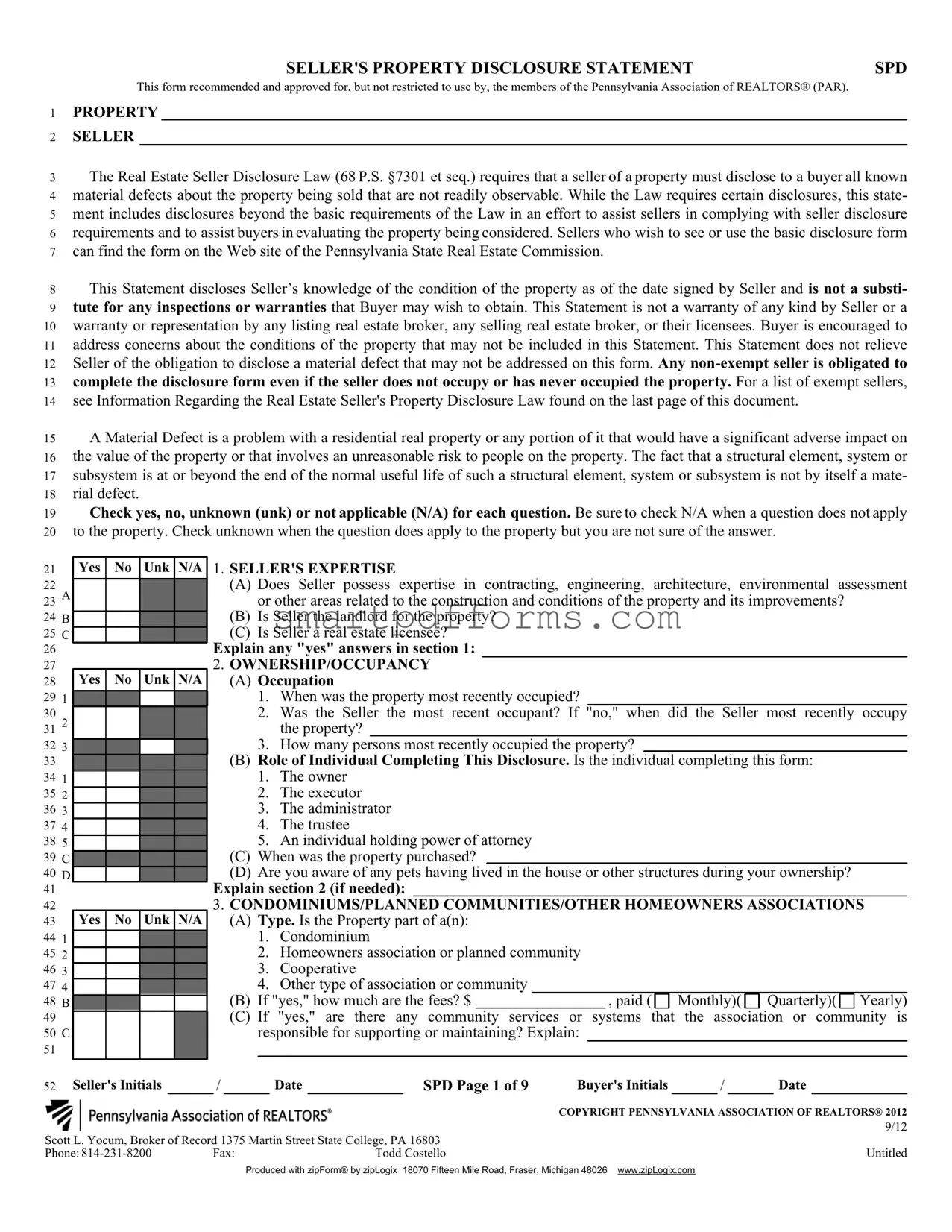
In the real estate transaction process, the Pennsylvania Seller's Property Disclosure Statement stands as a critical document designed to inform buyers about the condition of the property they consider purchasing. This form, recommended by the Pennsylvania Association of REALTORS® (PAR), fulfills requirements mandated by the Real Estate Seller Disclosure Law, obliging sellers to reveal all known material defects of a property that are not immediately visible. These disclosures aid in guiding sellers through compliance with disclosure obligations and assist buyers in evaluating the potential investment. It explicitly clarifies that it neither serves as a substitute for personal inspections nor warranties buyers might wish to obtain, emphatically stating that it does not constitute a warranty by the seller or any real estate professionals involved. Moreover, the document outlines the necessity for sellers to disclose even those defects not specifically mentioned in the form and emphasises the comprehensive nature of the disclosure, including conditions ranging from structural issues to the presence of pests or water supply problems. Exemptions apply to certain sellers, detailed in the concluding part of the document, which also explains what constitutes a material defect. The form's thoroughness in queries—requiring sellers to confirm, deny, or express uncertainty about a wide array of property features and conditions—underscores the law's intent to ensure transparency and protect both parties in the transaction.
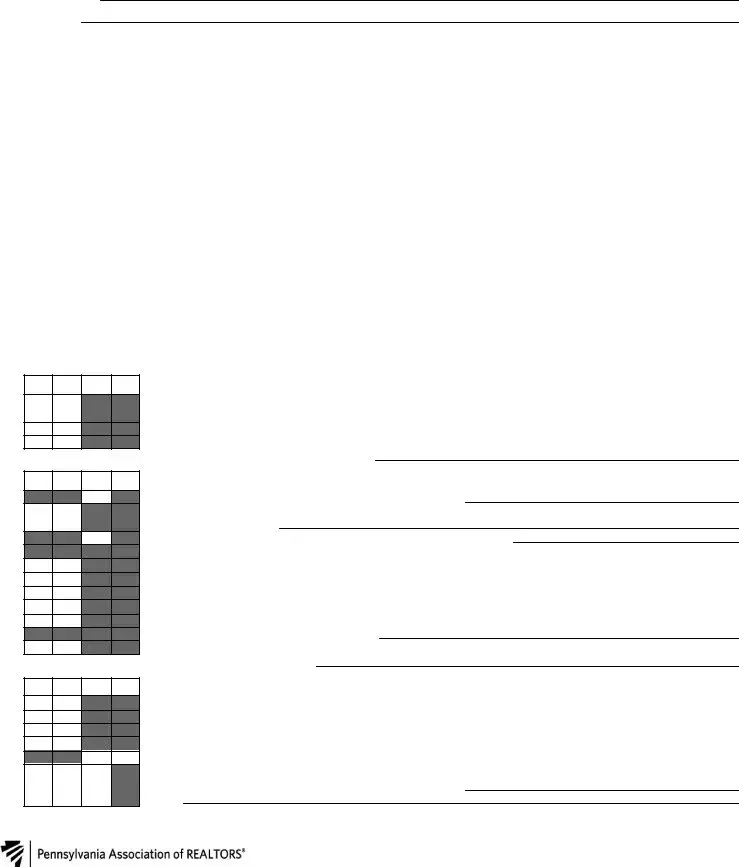
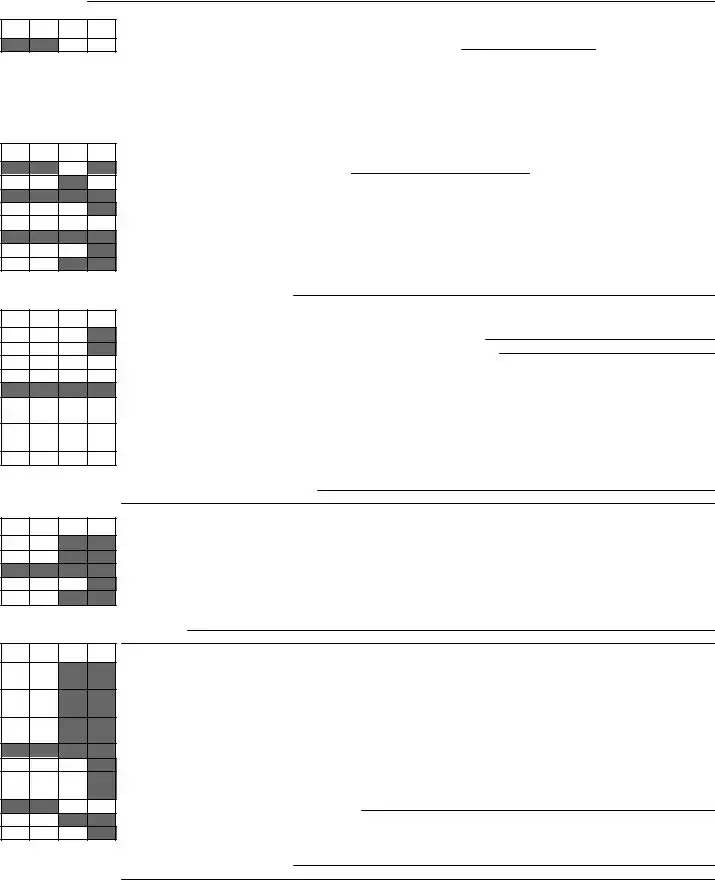
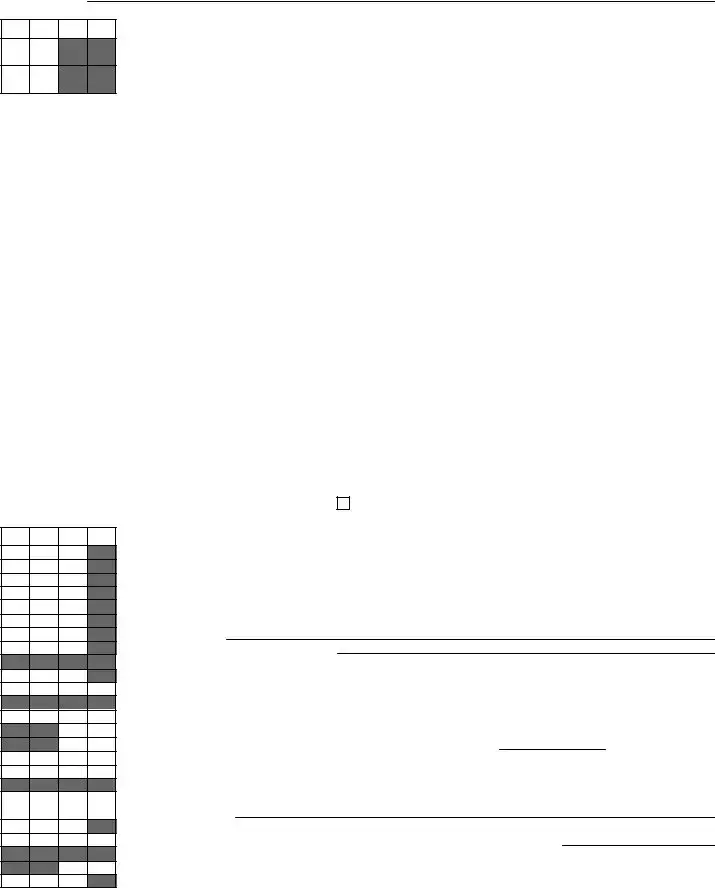
Preview - Pa Disclosure Form
SELLER'S PROPERTY DISCLOSURE STATEMENT |
SPD |
This form recommended and approved for, but not restricted to use by, the members of the Pennsylvania Association of REALTORS® (PAR).
1PROPERTY
2SELLER
3The Real Estate Seller Disclosure Law (68 P.S. §7301 et seq.) requires that a seller of a property must disclose to a buyer all known 4 material defects about the property being sold that are not readily observable. While the Law requires certain disclosures, this state- 5 ment includes disclosures beyond the basic requirements of the Law in an effort to assist sellers in complying with seller disclosure 6 requirements and to assist buyers in evaluating the property being considered. Sellers who wish to see or use the basic disclosure form 7 can find the form on the Web site of the Pennsylvania State Real Estate Commission.
8This Statement discloses Seller’s knowledge of the condition of the property as of the date signed by Seller and is not a substi- 9 tute for any inspections or warranties that Buyer may wish to obtain. This Statement is not a warranty of any kind by Seller or a
10warranty or representation by any listing real estate broker, any selling real estate broker, or their licensees. Buyer is encouraged to
11address concerns about the conditions of the property that may not be included in this Statement. This Statement does not relieve
12Seller of the obligation to disclose a material defect that may not be addressed on this form. Any
13complete the disclosure form even if the seller does not occupy or has never occupied the property. For a list of exempt sellers,
14see Information Regarding the Real Estate Seller's Property Disclosure Law found on the last page of this document.
15A Material Defect is a problem with a residential real property or any portion of it that would have a significant adverse impact on
16the value of the property or that involves an unreasonable risk to people on the property. The fact that a structural element, system or
17subsystem is at or beyond the end of the normal useful life of such a structural element, system or subsystem is not by itself a mate-
18rial defect.
19Check yes, no, unknown (unk) or not applicable (N/A) for each question. Be sure to check N/A when a question does not apply
20to the property. Check unknown when the question does apply to the property but you are not sure of the answer.
21
22
23A
24B
25C
29 1
30
312
323
341
352
363
374
385
39C
40D
441
452
463
474
48B
50C
Yes No Unk N/A
Yes No Unk N/A
Yes No Unk N/A
1.SELLER'S EXPERTISE
(A)Does Seller possess expertise in contracting, engineering, architecture, environmental assessment or other areas related to the construction and conditions of the property and its improvements?
(B)Is Seller the landlord for the property?
(C)Is Seller a real estate licensee?
Explain any "yes" answers in section 1:
2.OWNERSHIP/OCCUPANCY
(A)Occupation
1.When was the property most recently occupied?
2.Was the Seller the most recent occupant? If "no," when did the Seller most recently occupy the property?
3.How many persons most recently occupied the property?
(B)Role of Individual Completing This Disclosure. Is the individual completing this form:
1.The owner
2.The executor
3.The administrator
4.The trustee
5.An individual holding power of attorney
(C)When was the property purchased?
(D)Are you aware of any pets having lived in the house or other structures during your ownership? Explain section 2 (if needed):
3.CONDOMINIUMS/PLANNED COMMUNITIES/OTHER HOMEOWNERS ASSOCIATIONS
(A)Type. Is the Property part of a(n):
1.Condominium
2.Homeowners association or planned community
3.Cooperative
4.Other type of association or community
(B) If "yes," how much are the fees? $ |
|
|
, paid ( |
|
Monthly)( |
|
Quarterly)( |
|
Yearly) |
(C)If "yes," are there any community services or systems that the association or community is responsible for supporting or maintaining? Explain:
52 Seller's Initials |
|
/ |
|
Date |
|
SPD Page 1 of 9 |
Buyer's Initials |
|
/ |
|
Date |
|
|
|
|
|
|
|
|
COPYRIGHT PENNSYLVANIA ASSOCIATION OF REALTORS® 2012 |
|||||
|
|
|
|
|
|
|
|
|
|
9/12 |
||
Scott L. Yocum, Broker of Record 1375 Martin Street State College, PA 16803 |
|
|
|
|
|
|
||||||
Phone: |
Fax: |
|
Todd Costello |
|
|
|
|
|
Untitled |
|||
Produced with zipForm® by zipLogix 18070 Fifteen Mile Road, Fraser, Michigan 48026 www.zipLogix.com
53
54 |
D |
55 |
|
56 |
|
57 |
|
58 |
|
59 |
|
60 |
|
PROPERTY
Yes No Unk N/A
(D) How much is the capital contribution/initiation fee? $
Notice to Buyer: A buyer of a resale unit in a condominium, cooperative, or planned community must receive a copy of the declaration (other than the plats and plans), the
61 |
62 |
631
642
661
672
691
702
73
74
751
762
773
784
80
81 1
82
832
843
88
89
901
912
931
942
Yes No Unk N/A
Yes No Unk N/A
Yes No Unk N/A
4.ROOF
(A)Installation
1.When was the roof installed?
2.Do you have documentation (invoice, work order, warranty, etc.)?
(B)Repair
1.Has the roof or any portion of it been replaced or repaired during your ownership?
2.If it has been replaced or repaired, was the existing roofing material removed?
(C)Issues
1.Has the roof ever leaked during your ownership?
2.Are you aware of any current/past problems with the roof, gutters, flashing or downspouts? Explain any "yes" answers in section 4, including the location and extent of any problem(s) and any repair or remediation efforts:
5.BASEMENTS AND CRAWL SPACES
(A)Sump Pump
1.Does the property have a sump pit? If yes, how many?
2.Does the property have a sump pump? If yes, how many?
3.If it has a sump pump, has it ever run?
4 If it has a sump pump, is the sump pump in working order?
(B)Water Infiltration
1. Are you aware of any water leakage, accumulation, or dampness within the basement or crawl space?
2. Do you know of any repairs or other attempts to control any water or dampness problem in the basement or crawl space?
3. Are the downspouts or gutters connected to a public system?
Explain any "yes" answers in this section, including the location and extent of any problem(s) and any repair or remediation efforts:
6.
(A)Status
1.Are you aware of any
2.Are you aware of any damage caused by
(B)Treatment
1.Is your property currently under contract by a licensed pest control company?
2.Are you aware of any termite/pest control reports or treatments for the property?
Explain any "yes" answers in section 6, including the name of any service/treatment provider, if applicable:
98
99
100A
102B
104C
1061
1082
1093
110E
111F
Yes No Unk N/A 7. STRUCTURAL ITEMS
(A)Are you aware of any past or present movement, shifting, deterioration, or other problems with walls, foundations, or other structural components?
(B)Are you aware of any past or present problems with driveways, walkways, patios, or retaining walls on the property?
(C)Are you aware of any past or present water infiltration in the house or other structures, other
than the roof, basement or crawl spaces?
(D) Stucco and Exterior Synthetic Finishing Systems
1.Is your property constructed with stucco?
2.Is your property constructed with an Exterior Insulating Finishing System (EIFS), such as
Dryvit or synthetic stucco, synthetic brick or synthetic stone?
3. If "yes," when was it installed?
(E) Are you aware of any fire, storm, water or ice damage to the property?
(F) Are you aware of any defects (including stains) in flooring or floor coverings?
Explain any "yes" answers in section 7, including the location and extent of any problem(s) and any repair or remediation efforts:
115 Seller's Initials |
|
/ |
|
Date |
|
SPD Page 2 of 9 |
Buyer's Initials |
|
/ |
|
Date |
|
|
|
|
Produced with zipForm® by zipLogix 18070 Fifteen Mile Road, Fraser, Michigan 48026 www.zipLogix.com |
|
|
|
Untitled |
|||||
PROPERTY
116
117
118A
120B
Yes
No Unk N/A
8.ADDITIONS/ALTERATIONS
(A)Have any additions, structural changes, or other alterations been made to the property during your ownership? Itemize and date all additions/alterations below.
(B)Are you aware of any private or public architectural review control of the property other than zoning codes?
Note to Buyer: The PA Construction Code Act, 35 P.S. §7210.101 et seq. (effective 2004), and local codes establish standards for building and altering properties. Buyers should check with the municipality to deter- mine if permits and/or approvals were necessary for disclosed work and if so, whether they were obtained. Where required permits were not obtained, the municipality might require the current owner to upgrade or remove changes made by prior owners. Buyers can have the property inspected by an expert in codes com- pliance to determine if issues exist. Expanded title insurance policies may be available for Buyers to cover the risk of work done to the property by previous owners without a permit or approval.
128
129
130
131
132
133
134
135
136
137
138
139
Addition, structural |
Approximate date |
Were permits |
Final inspections/ |
change, or alteration |
of work |
obtained? |
approvals obtained? |
|
|
(Yes/No/Unknown) |
(Yes/No/Unknown) |
|
|
|
|
|
|
|
|
|
|
|
|
|
|
|
|
|
|
|
|
|
|
|
|
|
|
|
|
|
|
|
|
|
|
|
|
|
|
|
|
|
|
|
|
140
141
142
1431
1442
1453
1464
1475
1486
1497
1508
1521
1532
1551
1562
1573
1584
1595
1621
1632
1643
1661
1672
Yes
No Unk N/A
A sheet describing other additions and alterations is attached.
9.WATER SUPPLY
(A)Source. Is the source of your drinking water (check all that apply):
1.Public
2.A well on the property
3.Community water
4.A holding tank
5.A cistern
6.A spring
7.Other
8.No water service (explain):
(B)Bypass Valve (for properties with multiple sources of water)
1.Does your water source have a bypass valve?
2.If "yes," is the bypass valve working?
(C)Well
1.Has your well ever run dry?
2.Depth of Well
|
|
|
|
|
3. Gallons per minute |
|
|
, measured on (date) |
|
4.Is there a well used for something other than the primary source of drinking water?
5.If there is an unused well, is it capped?
(D)Pumping and Treatment
1.If your drinking water source is not public, is the pumping system in working order? If "no," explain:
2.Do you have a softener, filter, or other treatment system?
3.Is the softener, filter, or other treatment system leased? From whom?
(E)General
1. |
When was your water last tested? |
|
|
Test results: |
|
2. |
Is the water system shared? With whom? |
|
|
|
|
168 Seller's Initials |
|
/ |
|
Date |
|
SPD Page 3 of 9 |
Buyer's Initials |
|
/ |
|
Date |
|
|
|
|
Produced with zipForm® by zipLogix 18070 Fifteen Mile Road, Fraser, Michigan 48026 www.zipLogix.com |
|
|
|
Untitled |
|||||
PROPERTY
169Yes No Unk N/A
1711
1722
177
178Yes No Unk N/A
179 1
1802
1813
1831
1842
1853
1864
187
1881
1892
1903
1914
1925
1936
1947
1958
196
1971
1982
1993
2004
2015
2026
2037
204
205 1
2062
207
208 1
2092 
2103
2114
212
213 1
214
2152
219
220Yes No Unk N/A
2211
2222
2233
2244
2255
2266
2277
228
229B
(F)Issues
1.Are you aware of any leaks or other problems, past or present, relating to the water supply, pumping system, and related items?
2.Have you ever had a problem with your water supply?
Explain any "yes" answers in section 9, including the location and extent of any problem(s) and any repair or remediation efforts:
10.SEWAGE SYSTEM
(A)General
1.Is your property served by a sewage system (public, private or community)?
2.If no, is it due to availability or permit limitations?
3.When was the sewage system installed (or date of connection, if public)?
(B)Type Is your property served by:
1.Public (if "yes," continue to E, F and G below)
2.Community
3.An individual
4.Other, explain:
(C)Individual
1.Within 100 feet of a well
2.Subject to a
3.A holding tank
4.A drainfield
5.Supported by a backup or alternate drainfield, sandmound, etc.
6.A cesspool
7.Shared
8.Other, explain:
(D)Tanks and Service
1.Are there any metal/steel septic tanks on the Property?
2.Are there any cement/concrete septic tanks on the Property?
3.Are there any fiberglass septic tanks on the Property?
4.Are there any other types of septic tanks on the Property?
5.Where are the septic tanks located?
6.How often is the
7.When was the
(E)Abandoned Individual
1.Are you aware of any abandoned septic systems or cesspools on your property?
2.Have these systems or cesspools been closed in accordance with the municipality’s ordinance?
(F)Sewage Pumps
1.Are there any sewage pumps located on the property?
2.What type(s) of pump(s)?
3.Are pump(s) in working order?
4.Who is responsible for maintenance of sewage pumps?
(G)Issues
1.Is any waste water piping not connected to the septic/sewer system?
2.Are you aware of any past or present leaks, backups, or other problems relating to the sewage system and related items?
Explain any "yes" answers in section 10, including the location and extent of any problem(s) and any repair or remediation efforts:
11.PLUMBING SYSTEM
(A)Material(s). Are the plumbing materials (check all that apply):
1.Copper
2.Galvanized
3.Lead
4.PVC
5.Polybutylene pipe (PB)
6.
7.Other
(B)Are you aware of any problems with any of your plumbing fixtures (e.g., including but not lim- ited to: kitchen, laundry, or bathroom fixtures; wet bars; exterior faucets; etc.)?
If "yes," explain:
232 Seller's Initials |
|
/ |
|
Date |
|
SPD Page 4 of 9 |
Buyer's Initials |
|
/ |
|
Date |
|
|
|
|
Produced with zipForm® by zipLogix 18070 Fifteen Mile Road, Fraser, Michigan 48026 www.zipLogix.com |
|
|
|
Untitled |
|||||
PROPERTY
233
234
2351
2362
2373
2384
2395
2406
2417
2428
243B
244C
2481
2492
2503
2514
2525
2536
2547
2558
2571
2582
2593
2604
2615
2626
2637
2648
2659
2671
2682
2693
2704
2721
2732
2743
2754
2765
2776
2787
279E
2811
2822
2833
284P
2891
2902
2913
2924
2935
12.DOMESTIC WATER HEATING
Yes No Unk N/A |
(A) Type(s). Is your water heating (check all that apply): |
1.Electric
2.Natural gas
3.Fuel oil
4.Propane
5.Solar
6.Geothermal
7.Other
8.Is your water heating a
(B) |
How many water heaters are there? |
|
When were they installed? |
|
|
(C) |
Are you aware of any problems with any water heater or related equipment? |
||||
|
If "yes," explain: |
|
|
|
|
|
|
13. |
HEATING SYSTEM |
|
Yes |
No |
Unk N/A |
(A) Fuel Type(s). Is your heating source (check all that apply): |
|
|
|
|
1. |
Electric |
|
|
|
2. |
Natural gas |
|
|
|
3. |
Fuel oil |
|
|
|
4. |
Propane |
|
|
|
5. |
Geothermal |
|
|
|
6. |
Coal |
|
|
|
7. |
Wood |
|
|
|
8. |
Other |
|
|
|
(B) System Type(s) (check all that apply): |
|
|
|
|
1. |
Forced hot air |
|
|
|
2. |
Hot water |
|
|
|
3. |
Heat pump |
|
|
|
4. |
Electric baseboard |
|
|
|
5. |
Steam |
|
|
|
6. |
Radiant |
|
|
|
7. |
Wood stove(s) How many? |
|
|
|
8. |
Coal stove(s) How many? |
|
|
|
9. |
Other |
|
|
|
(C) Status |
|
|
|
|
1. |
When was your heating system(s) installed? |
|
|
|
2. |
When was the heating system(s) last serviced? |
|
|
|
3. |
How many heating zones are in the property? |
|
|
|
4. |
Is there an additional and/or backup heating system? Explain: |
|
|
|
(D) Fireplaces |
|
|
|
|
1. |
Are there any fireplace(s)? How many? |
|
|
|
2. |
Are all fireplace(s) working? |
3. Fireplace types(s) (wood, gas, electric, etc.):
4.Were the fireplace(s) installed by a professional contractor or manufacturer’s representative?
5. |
Are there any chimney(s) (from a fireplace, water heater or any other heating system)? |
|||
6. |
How many chimney(s)? |
|
When were they last cleaned? |
|
7.Are the chimney(s) working? If "no," explain:
(E) List any areas of the house that are not heated:
(F) Heating and Fuel Tanks
1. Are you aware of any heating fuel tank(s) on the property?
2. Location(s), including underground tank(s):
3. If you do not own the tank(s), explain:
 Are you aware of any problems or repairs needed regarding any item in section 13? If "yes," explain:
14.AIR CONDITIONING SYSTEM
Yes No Unk N/A |
(A) Type(s). Is the air conditioning (check all that apply): |
1.Central air
2.Wall units
3.Window units
4.Other
5.None
294 Seller's Initials |
|
/ |
|
Date |
|
SPD Page 5 of 9 |
Buyer's Initials |
|
/ |
|
Date |
|
|
|
|
Produced with zipForm® by zipLogix 18070 Fifteen Mile Road, Fraser, Michigan 48026 www.zipLogix.com |
|
|
|
Untitled |
|||||
PROPERTY
295
2961
2972
2983
300C
301P
3051
3062
307B
308C
309P
Yes No Unk N/A |
(B) Status |
1.When was the central air conditioning system installed?
2.When was the central air conditioning system last serviced?
3.How many air conditioning zones are in the property?
(C)List any areas of the house that are not air conditioned:
 Are you aware of any problems with any item in section 14? If "yes," explain:
|
|
15. |
ELECTRICAL SYSTEM |
|
Yes |
No |
Unk N/A |
(A) Type(s) |
|
|
|
|
1. |
Does the electrical system have fuses? |
|
|
|
2. |
Does the electrical system have circuit breakers? |
|
|
|
(B) What is the system amperage? |
|
|
|
|
(C) Are you aware of any knob and tube wiring in the home? |
|
|
|
Are you aware of any problems or repairs needed in the electrical system? If "yes," explain: |
||
16.OTHER EQUIPMENT AND APPLIANCES
This section must be completed for each item that will, or may, be sold with the property. The fact that an item is listed does not mean it is included in the Agreement of Sale. Terms of the Agreement of Sale negotiated between Buyer and Seller will determine which items, if any, are included in the purchase of the Property.
316
317
318
319
320
321
322
323
324
325
326
327
328
329
330
331
332
333
334
335
336
337P
3431
3452
3473
Yes No Unk N/A
Yes No Unk N/A
Item |
Yes |
No |
|
Item |
Yes |
No |
|
|
|
|
|
|
|
Electric garage door opener |
|
|
|
Trash compactor |
|
|
Garage transmitters |
|
|
|
Garbage disposal |
|
|
Keyless entry |
|
|
|
|
|
|
Smoke detectors |
|
|
|
Washer |
|
|
Carbon monoxide detectors |
|
|
|
Dryer |
|
|
Security alarm system |
|
|
|
Intercom |
|
|
Interior fire sprinklers |
|
|
|
Ceiling fans |
|
|
|
|
|
A/C window units |
|
|
|
Sprinkler automatic timer |
|
|
|
Awnings |
|
|
Swimming pool |
|
|
|
Attic fan(s) |
|
|
Hot tub/spa |
|
|
|
Satellite dish |
|
|
Deck(s) |
|
|
|
Storage shed |
|
|
Pool/spa heater |
|
|
|
Electric animal fence |
|
|
Pool/spa cover |
|
|
|
Other: |
|
|
Whirlpool/tub |
|
|
|
1. |
|
|
Pool/spa accessories |
|
|
|
2. |
|
|
Refrigerator(s) |
|
|
|
3. |
|
|
Range/oven |
|
|
|
4. |
|
|
Microwave oven |
|
|
|
5. |
|
|
Dishwasher |
|
|
|
6. |
|
|
Are you aware of any problems or repairs needed regarding any item in section 16? If "yes," explain:
17.LAND/SOILS
(A)Property
1.Are you aware of any fill or expansive soil on the property?
2.Are you aware of any sliding, settling, earth movement, upheaval, subsidence, sinkholes or earth stability problems that have occurred on or affect the property?
3.Are you aware of sewage sludge (other than commercially available fertilizer products) being spread on the property, or have you received written notice of sewage sludge being spread on an adjacent property?
349 Seller's Initials |
|
/ |
|
Date |
|
SPD Page 6 of 9 |
Buyer's Initials |
|
/ |
|
Date |
|
|
|
|
Produced with zipForm® by zipLogix 18070 Fifteen Mile Road, Fraser, Michigan 48026 www.zipLogix.com |
|
|
|
Untitled |
|||||
PROPERTY
350Yes No Unk N/A
351 |
4 |
|
|
|
|
|
|
4. |
Are you aware of any existing, past or proposed mining, |
||||||||||
352 |
|
|
|
|
|
|
|
tions that might affect this property? |
|
|
|
|
|
|
|
||||
353 |
|
|
|
|
|
|
|
|
Note |
to Buyer: The property may be subject to mine |
subsidence |
damage. |
Maps of |
||||||
354 |
|
|
|
|
|
|
|
|
the counties and mines where mine subsidence damage |
may |
occur |
and mine |
subsi- |
||||||
355 |
|
|
|
|
|
|
|
|
dence |
insurance are available through: Department |
of |
Environmental |
Protection, |
||||||
356 |
|
|
|
|
|
|
|
|
Mine |
Subsidence Insurance Fund, 25 Technology Drive, |
California |
Technology |
Park, |
||||||
357 |
|
|
|
|
|
|
|
|
Coal |
Center, PA 15423 (800) |
or |
(724) |
|||||||
358 |
|
|
|
|
|
|
|
|
(outside Pennsylvania). |
|
|
|
|
|
|
|
|||
359 |
|
|
|
|
|
|
(B) |
Preferential Assessment and Development Rights |
|
|
|
|
|
|
|
||||
360 |
|
|
|
|
|
|
|
Is the property, or a portion of it, preferentially assessed for tax purposes, or subject to limited |
|||||||||||
361 |
|
|
|
|
|
|
|
development rights under the: |
|
|
|
|
|
|
|
||||
362 |
1 |
|
|
|
|
|
|
1. |
Farmland and Forest Land Assessment Act - 72 P.S.§5490.1 et seq. (Clean and Green Program) |
||||||||||
363 |
2 |
|
|
|
|
|
|
2. |
Open Space Act - 16 P.S. §11941 et seq |
|
|
|
|
|
|
|
|||
364 |
3 |
|
|
|
|
|
|
3. |
Agricultural Area Security Law - 3 P.S. §901 et seq. (Development Rights) |
|
|
|
|
||||||
365 |
4 |
|
|
|
|
|
|
4. |
Any other law/program: |
|
|
|
|
|
|
|
|
|
|
366 |
|
|
|
|
|
|
|
Note to Buyer: Pennsylvania has enacted the Right to Farm Act (3 P.S. § |
|||||||||||
367 |
|
|
|
|
|
|
|
to limit the circumstances under which agricultural operations may be subject to nuisance suits |
|||||||||||
368 |
|
|
|
|
|
|
|
or ordinances. Buyers are encouraged to investigate whether any agricultural operations cov- |
|||||||||||
369 |
|
|
|
|
|
|
|
ered by the Act operate in the vicinity of the property. |
|
|
|
|
|
|
|
||||
370 |
|
|
|
|
|
|
(C) |
Property Rights |
|
|
|
|
|
|
|
||||
371 |
|
|
|
|
|
|
|
Are you aware of the transfer, sale and/or lease of any of the following property rights (by you |
|||||||||||
372 |
|
|
|
|
|
|
|
or a previous owner of the property): |
|
|
|
|
|
|
|
||||
373 |
1 |
|
|
|
|
|
|
1. |
Timber |
|
|
|
|
|
|
|
|||
374 |
2 |
|
|
|
|
|
|
2. |
Coal |
|
|
|
|
|
|
|
|
|
|
375 |
3 |
|
|
|
|
|
|
3. |
Oil |
|
|
|
|
|
|
|
|
|
|
376 |
4 |
|
|
|
|
|
|
4. |
Natural gas |
|
|
|
|
|
|
|
|||
377 |
5 |
|
|
|
|
|
|
5. |
Other minerals or rights (such as farming rights, hunting rights, quarrying rights) Explain: |
|
|||||||||
378 |
|
|
|
|
|
|
|
|
|
|
|
|
|
|
|
|
|
|
|
379 |
|
|
|
|
|
|
|
Note to Buyer: Before entering into an agreement of sale, Buyer can investigate the status of |
|||||||||||
380 |
|
|
|
|
|
|
|
these rights by, among other means, engaging legal counsel, obtaining a title examination of |
|||||||||||
381 |
|
|
|
|
|
|
|
unlimited years and searching the official records in the county Office of the Recorder of Deeds, |
|||||||||||
382 |
|
|
|
|
|
|
|
and elsewhere. Buyer is also advised to investigate the terms of any existing leases, as Buyer |
|||||||||||
383 |
|
|
|
|
|
|
|
may be subject to terms of those leases. |
|
|
|
|
|
|
|
||||
384 |
|
|
|
|
|
Explain any "yes" answers in section 17: |
|
|
|
|
|
|
|
||||||
385 |
|
|
|
|
|
|
|
|
|
|
|
|
|
|
|
|
|
|
|
386 |
|
|
|
|
|
18. FLOODING, DRAINAGE AND BOUNDARIES |
|
|
|
|
|
|
|
||||||
387 |
|
Yes |
No |
Unk |
N/A |
|
(A) Flooding/Drainage |
|
|
|
|
|
|
|
|||||
388 |
1 |
|
|
|
|
|
|
1. |
Is any part of this property located in a wetlands area? |
|
|
|
|
|
|
|
|||
389 |
2 |
|
|
|
|
|
|
2. |
Is any part of this property located in a a FEMA flood zone? |
|
|
|
|
|
|
|
|||
390 |
3 |
|
|
|
|
|
|
3. |
Are you aware of any past or present drainage or flooding problems affecting the property? |
|
|||||||||
391 |
4 |
|
|
|
|
|
|
4. |
Are you aware of any drainage or flooding mitigation on the property? |
|
|
|
|
|
|
||||
392 |
|
|
|
|
|
Explain any "yes" answers in section 18(A), including dates and extent of flooding: |
|
|
|
|
|||||||||
393 |
|
|
|
|
|
|
|
|
|
|
|
|
|
|
|
|
|
|
|
394Yes No Unk N/A
3961
4032
404 3
405
4064
(B)Boundaries
1.Are you aware of any encroachments, boundary line disputes, or easements affecting the property?
Note to Buyer: Most properties have easements running across them for utility services and other reasons. In many cases, the easements do not restrict the ordinary use of the property, and Seller may not be readily aware of them. Buyers may wish to determine the existence of easements and restrictions by examining the property and ordering an Abstract of Title or searching the records in the Office of the Recorder of Deeds for the county before entering into an agreement of sale.
2.Do you access the property from a private road or lane?
3.If "yes," do you have a recorded right of way or maintenance agreement?
4.Are you aware of any shared or common areas (driveways, bridges, docks, walls, etc.) or maintenance agreements?
Explain any "yes" answers in section 18(B):
410 Seller's Initials |
|
/ |
|
Date |
|
SPD Page 7 of 9 |
Buyer's Initials |
|
/ |
|
Date |
|
|
|
|
Produced with zipForm® by zipLogix 18070 Fifteen Mile Road, Fraser, Michigan 48026 www.zipLogix.com |
|
|
|
Untitled |
|||||
PROPERTY
411
412Yes No Unk N/A
4131
414
4152
4231
429 2
430
436Yes No Unk N/A
4371
4392
440
4411
4422
443E
444
4461
4482
4503
4524
460Yes No Unk N/A
4611
4632
4653
4664
467
4691
4722
19.HAZARDOUS SUBSTANCES AND ENVIRONMENTAL ISSUES
(A)Mold and Indoor Air Quality (other than radon)
1.Are you aware of any tests for mold, fungi, or indoor air quality in the property?
2.Other than general household cleaning, have you taken any efforts to control or remediate mold or
Note to Buyer: Individuals may be affected differently, or not at all, by mold contamination. If mold contamination or indoor air quality is a concern, buyers are encouraged to engage the services of a qualified professional to do testing. Information on this issue is available from the United States Environmental Protection Agency and may be obtained by contacting IAQ INFO, P.O. Box 37133, Washington, D.C.
(B)Radon
1.Are you aware of any tests for radon gas that have been performed in any buildings on the property? If "yes," list date, type, and results of all tests below:
First Test |
Second Test |
Date
Type of Test
Results (picocuries/liter)
Name of Testing Service
2.Are you aware of any radon removal system on the property?
If "yes," list date installed and type of system, and whether it is in working order below:
Date Installed |
Type of System |
Provider |
Working? |
|
|
|
|
|
|
|
|
(C)Lead Paint
If property was constructed, or if construction began, before 1978, you must disclose any knowledge of, and records and reports about,
1.Are you aware of any
2.Are you aware of any reports or records regarding
(D)Tanks
1.Are you aware of any existing or removed underground tanks? Size:
2.If "yes," have any tanks been removed during your ownership?
(E)Dumping. Are you aware of any dumping on the property?
(F)Other
1.Are you aware of any existing hazardous substances on the property (structure or soil) such as, but not limited to, asbestos or polychlorinated biphenyls (PCBs)?
2.Have you received written notice regarding the presence of an environmental hazard or bio- hazard on your property or any adjacent property?
3.Are you aware of testing on the property for any other hazardous substances or environ- mental concerns?
4.Are you aware of any other hazardous substances or environmental concerns that might
impact upon the property? Explain any "yes" answers in section 19:
20.MISCELLANEOUS
(A)Deeds, Restrictions and Title
1.Are you aware of any deed restrictions that apply to the property?
2.Are you aware of any historic preservation restriction or ordinance or archeological desig- nation associated with the property?
3.Are you aware of any reason, including a defect in title, that would prevent you from giving a warranty deed or conveying title to the property?
4.Are you aware of any insurance claims filed relating to the property?
(B)Financial
1.Are you aware of any public improvement, condominium or homeowner association assess- ments against the property that remain unpaid or of any violations of zoning, housing, build- ing, safety or fire ordinances or other use restriction ordinances that remain uncorrected?
2.Are you aware of any mortgage, judgment, encumbrance, lien, overdue payment on a sup- port obligation, or other debt against this property or Seller that cannot be satisfied by the proceeds of this sale?
474 Seller's Initials |
|
/ |
|
Date |
|
SPD Page 8 of 9 |
Buyer's Initials |
|
/ |
|
Date |
|
|
|
|
Produced with zipForm® by zipLogix 18070 Fifteen Mile Road, Fraser, Michigan 48026 www.zipLogix.com |
|
|
|
Untitled |
|||||

PROPERTY
475 |
|
Yes |
No |
Unk |
N/A |
(C) Legal |
|
|
|
|
|
|
476 |
1 |
|
|
|
|
1. |
Are you |
aware of |
any violations of federal, state, or local laws or regulations |
relating |
to |
this |
477 |
|
|
|
|
|
property? |
|
|
|
|
|
|
|
|
|
|
|
|
|
|
|
|
|
||
478 |
2 |
|
|
|
|
2. |
Are you aware of any existing or threatened legal action affecting the property? |
|
|
|
||
479 |
|
|
|
|
|
(D) Additional Material Defects |
|
|
|
|||
480 |
1 |
|
|
|
|
1. |
Are you |
aware of |
any material defects to the property, dwelling, or fixtures |
which |
are |
not |
481 |
|
|
|
|
|
disclosed elsewhere on this form? |
|
|
|
|||
|
|
|
|
|
|
|
|
|
||||
482 |
|
|
|
|
|
|
Note to Buyer: A material defect is a problem with a residential real property or any por- |
|||||
483 |
|
|
|
|
|
|
tion of it that would have a significant adverse impact on the value of the property or that |
|||||
484 |
|
|
|
|
|
|
involves an unreasonable risk to people on the property. The fact that a structural element, |
|||||
485 |
|
|
|
|
|
|
system or subsystem is at or beyond the end of the normal useful life of such a structural |
|||||
486 |
|
|
|
|
|
|
element, system or subsystem is not by itself a material defect. |
|
|
|
||
487 |
|
|
|
|
|
2. |
After completing this form, if Seller becomes aware of additional information about the |
|||||
488 |
|
|
|
|
|
|
property, including through inspection reports from a buyer, the Seller must update |
the |
||||
489 |
|
|
|
|
|
|
Seller’s |
Property |
Disclosure Statement and/or attach the inspection(s). These inspection |
|||
490 |
|
|
|
|
|
|
reports are for informational purposes only. |
|
|
|
||
491Explain any "yes" answers in section 20:
492
493
494
495
49621. ATTACHMENTS
497(A) The following are part of this Disclosure if checked:
498 Seller’s Property Disclosure Statement Addendum (PAR Form SDA)
499

500

501

502The undersigned Seller represents that the information set forth in this disclosure statement is accurate and complete to the
503best of Seller’s knowledge. Seller hereby authorizes the Listing Broker to provide this information to prospective buyers of
504the property and to other real estate licensees. SELLER ALONE IS RESPONSIBLE FOR THE ACCURACY OF THE
505INFORMATION CONTAINED IN THIS STATEMENT. Seller shall cause Buyer to be notified in writing of any informa-
506tion supplied on this form which is rendered inaccurate by a change in the condition of the property following completion of
507this form.
508 |
SELLER |
|
DATE |
509 |
SELLER |
|
DATE |
510 |
SELLER |
|
DATE |
511INFORMATION REGARDING THE REAL ESTATE SELLER DISCLOSURE LAW
512 |
EXECUTOR, ADMINISTRATOR, TRUSTEE SIGNATURE BLOCK |
513According to the provisions of the Real Estate Seller Disclosure Law, the undersigned executor, administrator or trustee is not required
514to fill out a Seller's Property Disclosure Statement. The executor, administrator or trustee, must, however, disclose any known mate-
515rial defect(s) of the property.
516 |
|
|
DATE |
|
|
|
|
|
|
|
|
517 |
|
RECEIPT AND ACKNOWLEDGEMENT BY BUYER |
|||
518The undersigned Buyer acknowledges receipt of this Disclosure Statement. Buyer acknowledges that this Statement is not a
519warranty and that, unless stated otherwise in the sales contract, Buyer is purchasing this property in its present condition. It
520is Buyer's responsibility to satisfy himself or herself as to the condition of the property. Buyer may request that the property
521be inspected, at Buyer's expense and by qualified professionals, to determine the condition of the structure or its components.
522 |
BUYER |
|
DATE |
|
|
523 |
BUYER |
|
DATE |
|
|
524 |
BUYER |
DATE |
|||
|
|
|
|
|
|
|
|
SPD Page 9 of 9 |
|
|
|
|
|
Produced with zipForm® by zipLogix 18070 Fifteen Mile Road, Fraser, Michigan 48026 www.zipLogix.com |
|
Untitled |
|

Generally speaking, the Real Estate Seller Disclosure Law requires that before an agreement of sale is signed, the seller in a residen- tial real estate transfer must make certain disclosures regarding the property to potential buyers in a form defined by the law. A resi- dential real estate transfer is defined as a sale, exchange, installment sales contract, lease with an option to buy, grant or other transfer of an interest in real property where NOT LESS THAN ONE AND NOT MORE THAN FOUR RESIDENTIAL DWELLING UNITS are involved. The Law defines a number of exceptions where the disclosures do not have to be made:
1.Transfers that are the result of a court order.
2.Transfers to a mortgage lender that result from a buyer’s default and subsequent foreclosure sales that result from default.
3.Transfers from a
4.Transfers made to a spouse or direct descendant.
5.Transfers between spouses that result from divorce, legal separation, or property settlement.
6.Transfers by a corporation, partnership or other association to its shareholders, partners or other equity owners as part of a plan of liquidation.
7.Transfer of a property to be demolished or converted to
8.Transfer of unimproved real property.
9.Transfers by a fiduciary during the administration of a decedent estate, guardianship, conservatorship or trust.
10.Transfers of new construction that has never been occupied when:
a.The buyer has received a
b.The building has been inspected for compliance with the applicable building code or, if none, a nationally recognized model building code; and
c.A certificate of occupancy or a certificate of code compliance has been issued for the dwelling.
In addition to these exceptions, disclosures for condominiums and cooperatives are limited to the seller’s particular unit(s). Disclosures regarding common areas or facilities are not required, as those elements are already addressed in the laws that govern the resale of con- dominium and cooperative interests.
Seller's Initials |
|
/ |
|
Date |
|
SPD Notices Page 1 of 1 Buyer's Initials |
|
/ |
|
Date |
Produced with zipForm® by zipLogix 18070 Fifteen Mile Road, Fraser, Michigan 48026 www.zipLogix.com |
Untitled |
Form Data
| Fact Name | Description |
|---|---|
| Purpose | The form serves to disclose the seller's knowledge of the property's condition and is not a substitute for inspections or warranties. |
| Governing Law | The Real Estate Seller Disclosure Law (68 P.S. §7301 et seq.) guides the disclosure requirements in Pennsylvania. |
| Material Defect Definition | A Material Defect is a problem with the property that significantly impacts its value or involves an unreasonable risk to people. |
| Seller Obligations | Any non-exempt seller must complete the disclosure form, regardless of whether they occupy or have never occupied the property. |
| Exemptions | Information on exempt sellers is available in the document and on the website of the Pennsylvania State Real Estate Commission. |
| Buyer Encouragement | Buyers are encouraged to address concerns about property conditions not included in the Statement. |
Instructions on Utilizing Pa Disclosure
After you have completed the Pennsylvania Disclosure Form, the next steps involve reviewing and finalizing your disclosure before it is submitted to the buyer. Each section should be carefully filled out to ensure that all known material defects and the condition of the property are disclosed accurately. This helps in providing a clear understanding of the property's condition to the buyer and aids in complying with legal requirements. Make sure all responses are truthful and any required explanations are provided in detail. Here is a step-by-step guide to help you through the process:
- Start with section 1 under "SELLER'S EXPERTISE." Check the appropriate box (Yes, No, Unknown, N/A) based on whether you have expertise in specific areas related to the property's condition. Explain any "Yes" answers.
- In section 2, "OWNERSHIP/OCCUPANCY," fill in the details regarding when the property was last occupied, your role, and any pet ownership.
- For section 3, "CONDOMINIUMS/PLANNED COMMUNITIES/OTHER HOMEOWNERS ASSOCIATIONS," indicate if the property is part of any such community and provide details about fees and services if applicable.
- In section 4, "ROOF," provide information about the installation, repair history, and any issues with the roof. Attach additional notes if necessary.
- Answer questions in section 5, "BASEMENTS AND CRAWL SPACES," regarding the presence of sump pumps, water infiltration, and any action taken to address these issues.
- In section 6, "TERMITES/WOOD-DESTROYING INSECTS, DRYROT, PESTS," disclose any known problems or treatments related to pests.
- Section 7, "STRUCTURAL ITEMS," asks about any known issues with the property's structural elements. Include all relevant details for any "Yes" responses.
- Fill out section 8, "ADDITIONS/ALTERATIONS," with information about any changes made to the property, paying special attention to permits and approvals.
- In section 9, "WATER SUPPLY," disclose the source of drinking water and any known issues with the water supply or system.
- Section 10, "SEWAGE SYSTEM," requires details about the type of sewage system and any known problems.
- Answer all questions in section 11, "PLUMBING SYSTEM," regarding the materials used in the plumbing system and any fixture issues.
- In section 12, "DOMESTIC WATER HEATING," provide details about the type and condition of the water heating system.
- Section 13, "HEATING SYSTEM," covers the type, installation, and maintenance of the heating system. Disclose any non-functioning areas or problems.
- Complete section 14, "AIR CONDITIONING SYSTEM," with information about the type and condition of any air conditioning system present.
- Review all your responses, ensuring accuracy and completeness. Sign and date the form where indicated.
Once you have filled out the form, make sure to provide the buyer with the completed disclosure. This way, the buyer is fully informed about the property's condition, which can contribute to a transparent and fair transaction.
Obtain Answers on Pa Disclosure
-
What is the purpose of the Seller's Property Disclosure Statement in Pennsylvania?
The purpose of the Seller's Property Disclosure Statement (SPD) is to provide buyers with important information about the condition of the property they are considering purchasing. It aims to disclose all known material defects of the property that are not easy for a buyer to observe. This disclosure helps sellers comply with legal obligations and assists buyers in making informed decisions. Despite the comprehensive nature of the disclosure, it is not a substitute for professional inspections or warranties a buyer may wish to obtain.
-
Who needs to complete the Pennsylvania Seller's Property Disclosure Statement?
Any seller of residential real property in Pennsylvania who does not fall under the list of exemptions is required to complete the SPD. This includes sellers who do not currently occupy or have never occupied the property. The disclosure must be made regardless of the seller's personal experience with the property. To understand exemptions and more specific requirements, the seller should refer to the Real Estate Seller Disclosure Law and the provided list of exempt sellers in the document.
-
What constitutes a 'material defect' according to the SPD?
A material defect is defined as any problem with the residential property or any part of it that would have a significant adverse impact on the value of the property or poses an unreasonable risk to people on the premises. It's important to note that the end of the normal useful life of structural elements, systems, or subsystems alone does not count as a material defect. This definition helps sellers understand what kinds of issues they need to disclose to potential buyers.
-
Can sellers make disclosures beyond what is legally required in the SPD?
Yes, sellers are encouraged to disclose any information that might assist in the decision-making process of the buyer, even if it goes beyond the minimum legal requirements stipulated by the Real Estate Seller Disclosure Law. The SPD form is designed to foster transparency and may include additional sections for disclosures that sellers believe are relevant to the property's condition and the buyer’s evaluation.
-
What should a buyer do if they have concerns about the property that are not addressed in the SPD?
Buyers are encouraged to address any concerns not covered by the SPD by obtaining professional inspections or warranties. While the SPD provides a comprehensive overview of the property's condition from the seller's perspective, it is not exhaustive. Buyers should conduct their due diligence, including hiring qualified inspectors to examine the property thoroughly, to ensure that all potential issues are identified before proceeding with the purchase.
Common mistakes
One common mistake is not fully disclosing expertise in the relevant areas, such as contracting, engineering, or architecture. Some sellers might underestimate the importance of this information, thinking it irrelevant, but it is critical in providing buyers with a clear understanding of the property's condition and any improvements or problems previously addressed.
Failing to accurately report the property's occupancy history is another mistake. Whether or not the seller was the most recent occupant can significantly impact a buyer's assessment and plans for a property, including considerations for maintenance and repairs.
Some sellers make the error of not providing complete information about homeowners associations, including fees and responsibilities. This oversight can leave buyers uninformed about potential additional costs or obligations associated with the property.
Incorrect or incomplete information about roof repairs or replacements is a common issue. Given the roof's crucial role in protecting a property, knowing its age, condition, and any repair history is vital for buyers in evaluating their potential investment.
Not disclosing water infiltration issues in basements or crawl spaces is a serious omission. Water problems can lead to significant structural issues and health problems from mold; hence, sellers must be upfront about any known issues.
Underreporting or failing to disclose past or present issues with termites, wood-destroying insects, dry rot, or other pests. Such problems can severely impact the property's integrity and value, and remediation can be costly.
Another mistake involves not accurately reporting on the condition and history of the heating and air conditioning systems. Knowing whether these systems are fully functional, when they were last serviced, and if there are any known problems is crucial for buyers.
Last but not least, inaccurately reporting or failing to disclose information on any additions, alterations, or repairs made to the property can lead to significant issues. These can range from legal problems, if work was done without proper permits, to unforeseen expenses for the buyer if problems arise from unreported or inadequately completed work.
It's imperative that sellers understand the importance of fully and accurately completing the Pa Disclosure form. This not only ensures a smoother transaction but also helps in protecting both parties from potential disputes down the line. Being thorough and honest in the disclosure process is crucial in fostering trust and ensuring a fair deal for all involved.
Documents used along the form
When dealing with real estate transactions, specifically in Pennsylvania, the Seller's Property Disclosure Statement (SPD) is a crucial document designed to provide buyers with comprehensive information about the property's condition. However, the SPD is often accompanied by several other forms and documents to ensure a thorough understanding and legal compliance for both parties. Below is a list of other important forms and documents that are frequently used alongside the Pennsylvania Disclosure form, each serving its own specific purpose in the real estate transaction process.
- Agreement of Sale: This contract formalizes the terms and conditions of the sale, including price and closing date, between the buyer and seller.
- Home Inspection Report: A detailed report by a professional inspector outlining the condition of the home’s systems, structure, and other critical areas.
- Title Report: Documents the legal ownership of the property and any liens, encumbrances, or easements affecting it.
- Radon Disclosure Form: Disclosure regarding the presence of radon in the property, which is a health hazard if above certain levels.
- Lead-Based Paint Disclosure: Required for homes built before 1978, this form informs buyers about the presence of lead-based paint.
- Mortgage Pre-Approval Letter: Provided by a lender, this letter indicates how much money the buyer can borrow.
- Flood Zone Statement: Indicates whether the property is in a flood zone, impacting insurance requirements and costs.
- Homeowners' Association (HOA) Documents: For properties within HOAs, these documents outline the rules, regulations, and fees associated with the community.
- Septic System Report: For properties with a septic system, this report provides details about the system's condition and compliance with local regulations.
- Utility Bills: Recent utility bills can give the buyer an idea of what to expect in terms of monthly expenses for the property.
Understanding and utilizing these documents in conjunction with the Pennsylvania Disclosure form equips buyers with the knowledge needed to make informed decisions and helps ensure a smooth transaction process. Each document plays a role in painting a comprehensive picture of the property, from its physical condition to the legal and financial considerations involved in purchasing it. Whether you're a first-time homebuyer or a seasoned real estate investor, being well-informed and prepared with these documents can significantly influence the success of your real estate endeavors.
Similar forms
The Real Estate Transfer Disclosure Statement is similar to the Pa Disclosure form as it requires sellers to disclose known material defects in the property that might affect its value or the safety of its occupants. This form, used in various states, lets buyers understand the condition of the property before finalizing the purchase.
The Lead-Based Paint Disclosure shares similarities with the Pa Disclosure form by necessitating the disclosure of specific conditions - in this case, the presence of lead-based paint in properties built before 1978. This disclosure is intended to inform buyers about potential health risks.
The Homeowners' Association (HOA) Disclosures resemble the Pa Disclosure form as they provide information on the HOA's financial health, rules, and whether the property owes any fees. They help buyers understand their obligations towards the HOA and any additional costs.
The Home Inspection Report, though not a seller-provided document, is parallel in its aim to disclose the property condition to the buyer. It details the property's state from a structural and systems perspective, highlighting defects, needed repairs, and maintenance issues.
The Sewer Scope Inspection Report is akin to sections of the Pa Disclosure form that address sewage and septic systems. This report gives detailed information on the condition of the sewer line, helping to avoid unforeseen repair expenses post-purchase.
The Natural Hazard Disclosure Statement has similarities with the Pa Disclosure form by revealing risks related to natural disasters such as floods, wildfires, and earthquakes. It is crucial for buyers to assess property safety and insurance needs.
Dos and Don'ts
Filling out the Pennsylvania Disclosure Form (SPD) is a crucial step in the property selling process. Below are detailed dos and don'ts to guide you through accurately completing the form.
- Do provide honest and accurate answers to each question. Being truthful helps maintain transparency and trust.
- Do review the definition of a Material Defect as the form outlines, ensuring you understand what needs to be disclosed.
- Do check "unknown" if you are genuinely unsure about a specific detail regarding the property’s condition.
- Do take your time to go through each section meticulously to avoid any oversight.
- Do offer detailed explanations when answering "yes" to any issues or defects, providing as much context and information as possible.
- Do update the disclosure form if any changes in property condition occur after initially filling the form and before the sale is finalized.
- Do attach additional documents or reports if available, especially for any significant issues that have been repaired or require further attention.
- Do consult with a real estate professional or legal advisor if you have questions or concerns about filling out the form correctly.
- Do remember that this form is a part of legal disclosures during property selling in Pennsylvania, emphasizing its importance.
- Do know that this disclosure is not a substitute for a home inspection and buyers might still opt for their own professional inspection.
- Don't withhold information about known defects or try to minimize issues with the property; full disclosure is required by law.
- Don't guess or provide misleading answers—if you don’t know, it’s perfectly acceptable to check "unknown."
- Don't leave any sections blank; ensure you answer all questions, marking "N/A" where the question does not apply to your property.
- Don't ignore or overlook the need to disclose issues with major systems and components of the property, such as the roof, plumbing, heating, and electrical systems.
- Don't forget to disclose issues that were previously repaired; past issues and repairs are relevant information for the buyer.
- Don't consider this form as an opportunity to repair or fix issues. It’s simply a disclosure document, not a repair list.
- Don't neglect to review the exempt sellers list to confirm your obligation to complete the form.
- Don't rush through the process. Taking your time ensures accuracy and completeness.
- Don't forget to initial and date the form as required, ensuring its validity.
- Don't fail to provide the buyer with any additional relevant documents pertaining to the property’s condition.
Misconceptions
When looking at the Seller's Property Disclosure Statement (SPD) form used in Pennsylvania, several misconceptions often arise. This document plays a major role in the real estate transaction process, aiming to ensure that buyers are fully informed about the condition of the property they intend to purchase. However, misunderstandings about what the form does and does not do can lead to confusion for both sellers and buyers.
Here are four common misconceptions about the Pennsylvania Disclosure form:
- It’s a warranty or guarantee about the property’s condition. Some people mistakenly believe that the SPD is a warranty from the seller or the real estate agents involved, guaranteeing the condition of the property. However, the form is actually a declaration of the seller's knowledge about the property at the time of filling out the form. It does not serve as a warranty or guarantee. Buyers are encouraged to conduct their own inspections and not to rely solely on this disclosure.
- All defects need to be repaired by the seller. Another common misconception is that the seller must fix all disclosed defects before the sale proceeds. The SPD's purpose is to inform the buyer of the property's condition, including known material defects. It's up to the buyer and seller to negotiate any repairs or adjustments to the sale agreement based on this information, but there's no requirement for the seller to repair everything listed on the form.
- Disclosure is only required for inhabited properties. Some sellers assume that if they have never lived in the property, they are not required to complete the disclosure form. This is incorrect. The law mandates that any non-exempt seller must provide a disclosure, regardless of whether they have ever occupied the property. The key exception involves certain types of sellers, such as banks selling foreclosed properties, who may be exempt from providing a disclosure.
- The form covers all possible defects and issues with the property. While the SPD is comprehensive, it does not cover every possible issue that could arise with a property. The form is designed to disclose the seller's current knowledge of material defects. However, issues unknown to the seller or deemed non-material do not need to be included. Buyers should conduct thorough inspections to uncover any potential issues not disclosed in the SPD.
Understanding these misconceptions can help both buyers and sellers navigate the real estate transaction process more smoothly, ensuring that expectations are properly managed and that both parties are adequately informed.
Key takeaways
Filling out the PA Disclosure form is an essential step in the property transaction process in Pennsylvania, ensuring transparency and trust between the seller and the buyer. Here are key takeaways:
- The Real Estate Seller Disclosure Law mandates the disclosure of all known material defects on a property that are not obvious through a general inspection.
- This form serves to both guide sellers in fulfilling their disclosure obligations and assist buyers in evaluating the property's condition.
- It is important to understand that the PA Disclosure Statement is not an alternative to professional inspections or warranties a buyer may wish to obtain. It does not serve as a warranty by the seller or any real estate professionals.
- Sellers are required to complete this form to the best of their knowledge and belief, answering questions with "yes," "no," "unknown," or "not applicable," providing further explanation for any "yes" answers when necessary.
- The disclosure includes a wide range of questions from the expertise of the seller in related fields such as contracting or architecture to specific details about the property's roof, basement, water supply, and sewage system among others.
- A "Material Defect" is defined as any problem with the property that significantly affects its value or poses an unreasonable risk to occupants. This does not include issues due to normal wear and tear.
- Non-exempt sellers, regardless of whether they have occupied the property or not, are obligated to complete the form. The document includes a list of seller exemptions for reference.
- Specific sections require detailed information on various aspects such as the presence and details of sump pumps, water infiltration issues, and treatments for termites or other pests.
- Disclosure of any alterations or additions made to the property during ownership is required, including whether permits were obtained, which might affect future renovations or insurance policies.
- The form also addresses the condition and history of the property’s essential systems like plumbing, heating, and air conditioning, asking for details about installations, repairs, and any known defects.
It's imperative for sellers to approach the disclosure process seriously, providing accurate and honest answers to safeguard against future disputes and ensure a fair transaction for all parties involved.
Popular PDF Forms
Custom Playing Card - Our custom playing cards are perfect for magic tricks with a personal twist.
Lic 215 - Questions about disciplinary actions in previous facilities are included in the Lic 215 to maintain high standards of care and operation within state-licensed facilities.
Child Support Increase - Details the procedural steps for modifying support orders issued after October 13, 2010, applying contemporary legal standards.